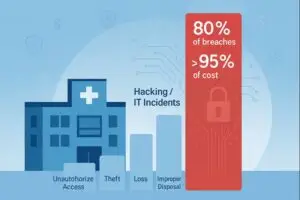
When Healthcare Breaches Happen, Cyber Attacks Pay the Highest Price: Insights from Two Years of HHS OCR Data
Over the last two years, large healthcare data breaches reported to the U.S. Department of Health and Human Services (HHS) Office for Civil Rights (OCR) have revealed a consistent pattern: almost all of the risk and almost all of the cost sit in one place – server aggregated data.

Sharding to Contain the Blast Radius of Data Breaches
Modern SaaS platforms sit on top of massive, multi-tenant data stores. When those stores are breached, the damage is rarely limited to a single record; it is often “wholesale” compromise of large slices of the user base. For a CISO or CTO, this is the critical risk: not that a record can be stolen, but that everything a given system knows becomes available in one incident.
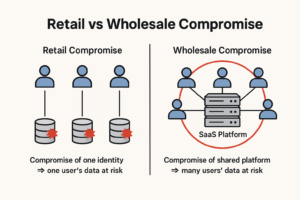
When SaaS Fails, It Fails at Scale: Why Data-in-Use Protection Matters
One flaw in a shared SaaS platform can expose millions of users at once. Why wholesale compromise is structural, and how data-in-use protection with sharding contains it.
Protecting Data-In-Use in the Cloud: A Pragmatic Philosophy
Once an attacker can read memory, encryption at rest and MFA stop helping. A pragmatic approach to data-in-use: trust the session, not the environment, and assume breach.

The Hidden Risk in Cloud Databases: When a Vendor Breach Becomes Your Breach
Most companies lock down their apps – but leave the side doors wide open.
Those “side doors” are your vendors, integrations, and managed services.

The Lifecycle of a Hacked Database – and Why Aggregated Data Takes the Biggest Hit
A database breach isn’t a single event—it’s a story that unfolds in stages.
Each stage brings attackers closer to the crown jewels: your aggregated data.